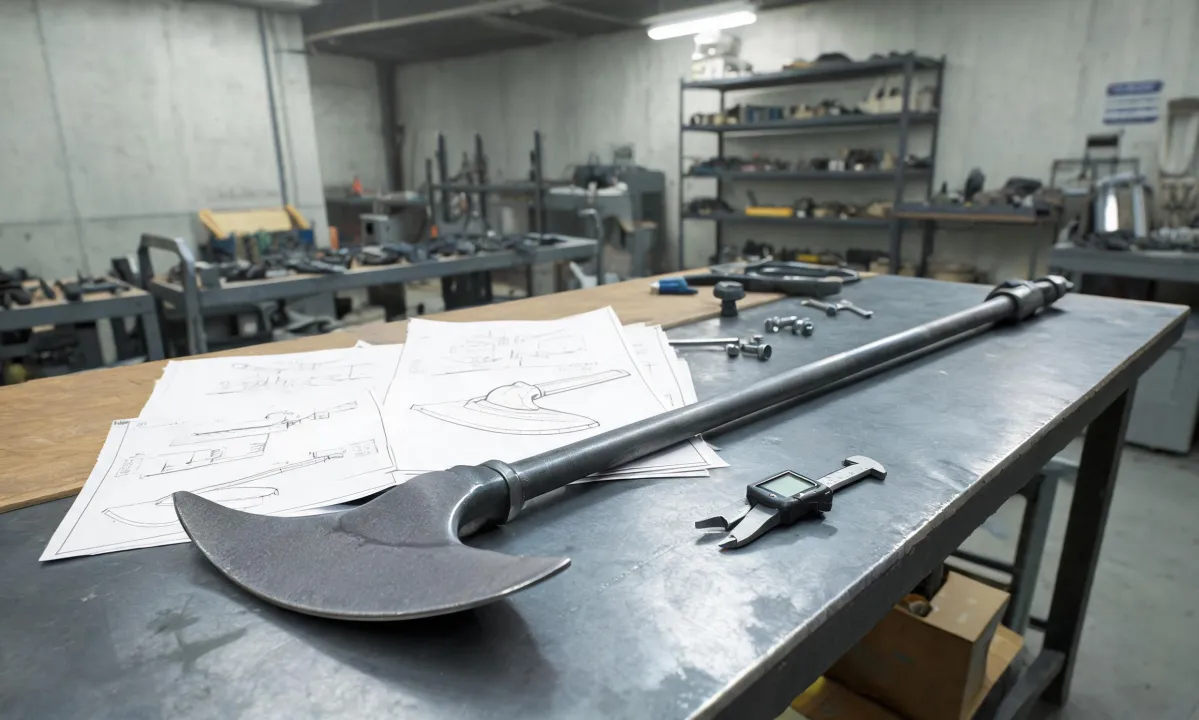
I'm kneeling behind a field cultivator in the yard, wrench in one hand, looking at the pitch-adjust pins on the front row and the bolts that hold the sweeps. It's getting late and the field is ready, so the only real question is which setting I touch first. Every operator I know reaches for pitch, because pitch feels like it does something. On this machine it is the last thing I change.
The claim I'll defend here: working depth and travel speed decide how much residue actually gets buried, and pitch decides how much extra disturbance and draft you pay to get there. Set the two that carry the job, judge a short strip, and only then move the angle.
What Pitch Actually Changes on a Field Cultivator
Pitch is the angle a sweep or blade is set at. Set that blade at a sharper angle and the usual result is more soil disturbed. Pitch is an angle at the tool, not a working-depth figure, so changing it changes how soil is lifted and thrown off the point rather than how deep the point runs.
That's why I treat pitch as a trim adjustment rather than the main control. The extension tillage guidance doesn't hand out degree values, and there is no manufacturer adjustment diagram in front of me, so I won't invent a number for you. Your own manual carries the range for your frame and your point style.
Depth and Speed Carry the Residue Job
Depth and speed decide how much of the field's residue ends up under soil. Shank spacing belongs in that list too, sitting alongside operating speed and operating depth as one of the things that influence how much residue any tillage implement buries. Depth moves most predictably: more depth, and more soil gets thrown over the crop residue. Speed pushes in the same direction, though to a lesser degree, and that hedge matters, because a faster pass is not a substitute for a deeper one.
So depth and speed set how much soil moves over the trash, while pitch sets how hard each tool engages ground it is already in. One is a volume control, the other an intensity control, and opening both at once costs you the ability to tell which one fixed your strip.
Keep the scale of that honest. These describe tillage implements as a category. They don't tell you what your frame, your point style, your soil moisture or your residue load will do on a given afternoon.
Why the Setting Order Costs You a Pass
Suppose I do the natural thing: trash is still on top, so I sharpen pitch, then decide the machine is running shallow and add depth, then run the strip again. I've learned nothing usable. The strip no longer represents the machine, because two settings moved between passes. The fix isn't sharper eyes, it's moving one thing at a time so the strip stays a fair comparison.
The cost of the wrong order is a second trip over the same ground: same fuel, same labor, another pass of disturbance on soil that may not want it, on a strip whose condition I partly created myself. That's a poor trade for a few minutes of walking around behind the frame.
The second cost shows up weeks later. Change three things, get a good strip, and I still don't know which combination worked. Next week's field has different residue, and a memory of a pin position is a poor substitute for a note.
Three Fields, Three Different First Moves
Three short cases, all of them hypothetical, to show how the choice lands differently.
Imagine a corn-on-corn field with heavy residue, a shallow pass, and too much trash still lying on top. The instinct is to sharpen pitch. Depth is the better first move, because depth is what puts more soil in the air over the trash, and sharpening pitch there mostly makes the tool work harder without covering any more trash.
Picture the opposite: light soybean stubble that comes out black and cloddy, worked harder than you wanted. Pitch is already doing enough. Backing it off is the cheaper correction, since sharpening further buys thrown soil and draft without fixing an over-worked surface.
Now hold depth and pitch and change only travel speed. A faster pass can leave the surface uneven and short of cover, because speed moved and nothing else did. When one variable changes and the strip changes with it, I've found my lever. When two move, I've found a story.
Walking the Trial Strip With a Wrench
I squat behind the frame and check where the pitch-adjust pins sit against where they ended last season. Same holes. I walk the shanks one at a time, hand on each sweep, looking for the point that wore unevenly or the bolt that has started to walk. Nothing dramatic.
Then I run the first short strip at the depth and speed I set, stop, and walk back along it. What I notice first isn't the soil. It's the corn stalks still lying flat on top near the wheel tracks, while further over in the strip the trash is mostly covered, and I stand there working out whether that gap comes from the ground, from how the machine is tracking, or from the fact that I set depth by eye instead of measuring it against the frame.
I find one more thing worth writing down. Where the soil was thrown, it landed further than I expected. Depth and speed were already doing most of the work before pitch entered the conversation, so I leave the pins alone and change nothing else that day.
The Order I Set the Machine In
Settle the target before touching a pin: how much residue needs to stay on the surface, and how much disturbance this field can take before the surface turns to powder. That's a judgment, not a number off a chart.
Set working depth next, because it does the most predictable work and you can check it with a tape against the frame. Then pick a travel speed you can hold across the whole field, not the fastest gear the tractor will pull on the headland. Run one short strip, stop, get off the seat, and look at what is on top and how far soil is being thrown.
Only then touch pitch, and move it in small steps. Close is close: if the strip looked right, leave the pins where they are. If it fell short, move one step and run another short strip. Finish by recording depth, speed and pin position in the same place you keep the rest of your field notes.
The manual owns what I've skipped here, meaning the adjustment range for your frame, the torque values for the hardware, the service intervals. Read those before the season and treat the sequence above as the order in which you use them.
Where This Guidance Stops
What I've described is mechanism from extension tillage writing, and that's all it is: how implements behave as a category, not settings for a specific model. The publication carries its own date, so it can't confirm what sits on a dealer's lot this year, what a machine costs, or which adjustment range it ships with. There is no manufacturer measurement diagram in what I've been able to work from, and no shared definition of how pitch relates to depth across brands, so a spec sheet quoting a pitch angle deserves the question — measured against what?
Two gaps are worth naming. I have no torque figures or service intervals here, and no wet-soil limit, even though wet ground is where most incorporation arguments start. Those belong to your manual and your dealer, not to a general article.
The trade-off stays the same everywhere: sharper pitch buys disturbance and costs draft, and nothing promises a residue target. The strip behind the machine is the only place the answer shows up.
Before the next pass, flag one strip and run it in that order: depth, speed, then walk behind the frame and read the surface, and only then pitch. Write down the setting that worked instead of hunting for a universal number.
